Showing posts with label evidence based resources. Show all posts

Saturday, July 5, 2014

Bed Sharing and Not So NICE Guidelines

A couple of days ago I was leisurely leafing through the newspaper while having breakfast (for the first time since... well, I can't even remember!) when I came across this article in The Guardian. Basically, the National Institute for Health and Care Excellence (NICE) here in the UK has drafted guidelines against co-sleeping in the first year of a baby's life (an increase from their 2006 guidelines), claiming that bed sharing increases the risk of Sudden Infant Death Syndrome (SIDS).


I found this beautiful image online but couldn't find the artist's name -
please let me know if you have more information.

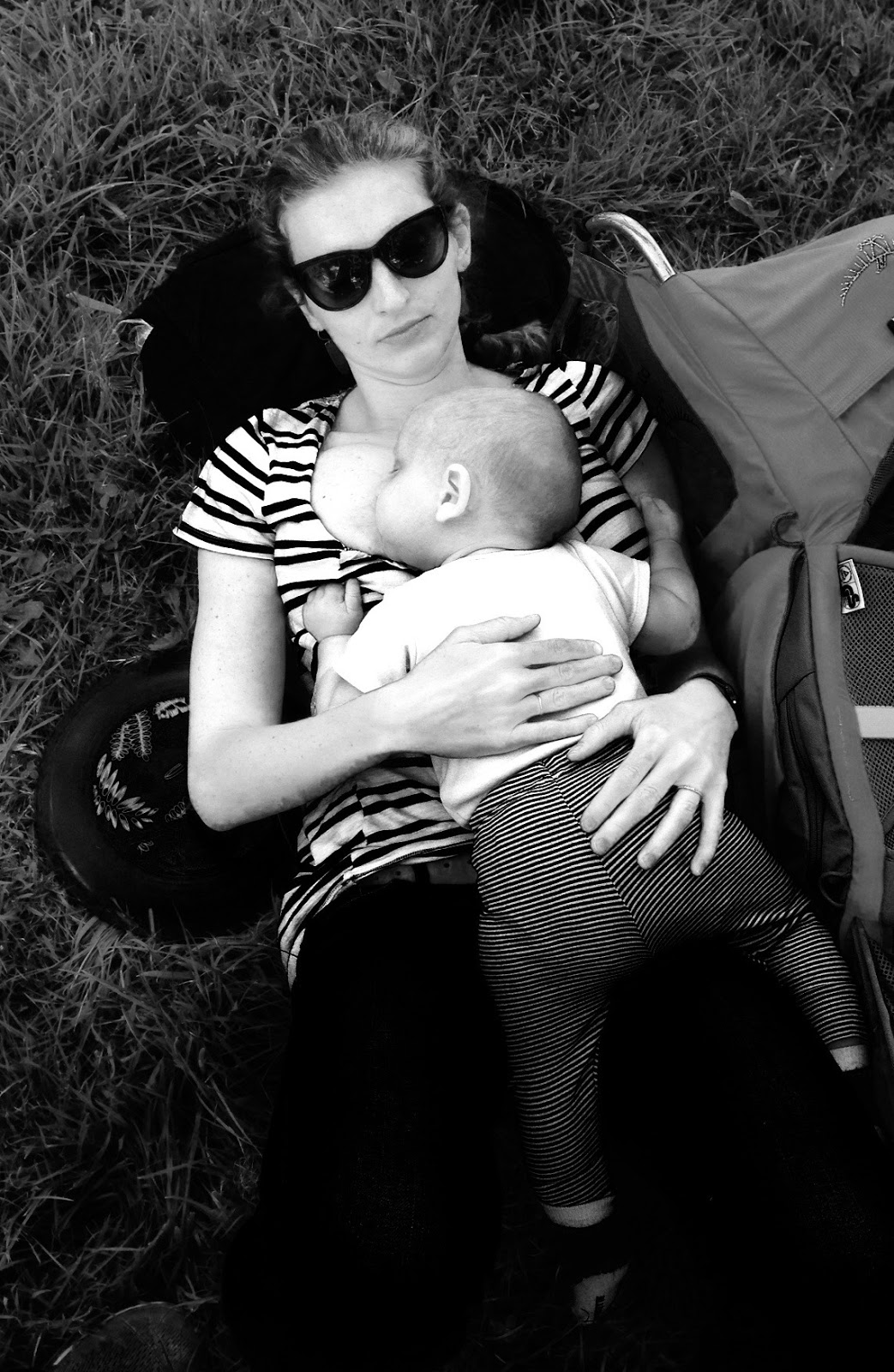
Before going any further, you should know that Ruben has maybe used his Arms Reach Co-sleeper twice since he was born. D and I actually bought a king size bed when we moved into our current place with the thought that we hoped to fill it with children. So yes, we co-sleep with our son. Early on, I  also learned to feed Ruben in the side lying position and I haven't looked back ever since. (Again, I am grateful to Kate Evans and her other wonderful book for showing me the way: "The Food of Love: Your Formula for Successful Breastfeeding.") Sleeping with Ruben and knowing how to breastfeed while side lying has meant a lot more resting, cuddling, and general well being for our whole family. It's also meant that D and I have gotten creative with our "sexy time," which has been fun (more on that in this article by the Analytical Armadillo, which I have quoted in the past.)

OK, with that in mind, you won't be surprised to hear that I was outraged by NICE's guideline to avoid co-sleeping in the first year - I just wanted to scream out the windows that they were wrong! Luckily there are more centered and better informed people around me who have taken the time to respond to the new guidelines with equal passion, minus the crazy screaming out of the windows. One of the most compelling arguments has been that mothers all around the world will end up bed sharing at some point, and the most important thing is that this is done intelligently, knowing what the potential risk factors are to the baby (surprisingly, falling off the bed is not the major one!)

For all those of you who are interested in the topic, or are worried by the suggested new guidelines, here is a selection of my favorite articles, posts, studies and leaflets on co-sleeping ...


Blog Posts and Articles:

The Hackney Doula: "Lessons in Co-Sleeping."
A personal account mixed with lots of good links and research on co-sleeping.

The Newubury Doula: "10 Things I Wish NICE Would Say."
10 core pieces of information on co-sleeping in an easy to read format.

Sarah Ockwell-Smith: "Bedsharing and SIDS - Why We Have It All Wrong."
In which she calls the Carpenter et al study a "scaremongering piece of 'science'." This is the study which has heavily influenced the NICE draft according to the Hackney Doula.

Milli Hill: "Co-sleeping: Are New Mums Being Given the Right Advice?"
A great piece on the problems with the underlying assumptions behind co-sleeping.


Online resources:

NCT: "NCT response to NICE draft recommendations to tackle Sudden Infant Death Syndrome."

ISISonline - for evidence based information on infant sleep.

UNICEF - "Caring for Your Baby Leaflet" and the study on breastfeeding and co-sleeping.

Dr. Sears - "Safe Co-sleeping Habits."


Saturday, June 28, 2014

Documentary: "The Business of Being Born"

In 2009, I came across a documentary that kind of blew my mind. It's called "The Business of Being Born" (BoBB) and not only can you see the trailer here, but you can actually watch the whole movie for free here! In short, it's a documentary about birth in the USA, both in and out of hospitals. If you haven't seen it, check it out. Although the documentary focuses on the US, a lot of the issues explored ring true internationally (as always, the best thing to do is to check out numbers and statistics for your own country, which is not so hard with a search engine.)


When I first saw BoBB, there were several interesting points that came up, but probably what made the strongest impression on me was that today's common, Western expectations surrounding birth are (surprise surprise!) shaped by cultural and social assumptions rooted in history, a history that I knew nothing about. For instance, how did we end up thinking that lying on our backs with our legs spread apart is a good birth position? What did women do before birthing in a hospital became standard practice? How did we get to epidurals? BoBB looks closely at how, beginning in the 20th century, birth moved from the private space of homes to the private sector of hospitals. In addition, this documentary turns a spotlight on how hospital procedures around birth are not centered around mothers but around a business that has much to do with income, prestige, predictability and speed. It can be a tough film to watch, but one I highly recommend, especially before you are even pregnant (I firmly believe that most of your birthing learning should happen before you are pregnant, so that you are not trying to do a crash course in everything you need to know while struggling to stay awake/stay seated for more than 5 minutes/hold your pee/think of something other than what you will have for breakfast, lunch and dinner.)

It was BoBB that woke me up to the importance of making informed decisions when in came to birth. This, and a general distrust of hospitals due to the high rates of infections, missed diagnoses, and interventions on several of the women whom I have known to give birth in hospitals in the past years. (As a thought experiment, just for yourself, it might be interesting to think about how many women you know who have given birth without any form of intervention - this includes pain killers, induction, emergency Cesarean, episiotomy, blood transfusions, forceps or ventouse delivery. I can only think of 2 out of about 30 women.)

Now, before going any further, I would like to say that hospitals are great for emergencies. Even BoBB makes that clear. And not only that, but if upon entering a hospital you feel yourself relax and soften with the trust you have in that institution, than a hospital might be a great place for you to give birth in. Yet whether you like hospitals or not, the idea of learning about what a hospital is designed to do is crucial, and BoBB addresses some of the more important issues in this regard, like the standard hospital procedures around birth and some of the ways things could be different if approached from another perspective.

Among the people who speak in the documentary is the lovely Marsden Wagner MD. If you don't have time to watch BoBB, you might like to check out this interview with him. (My favorite question/answer starts at 2.25, with the difference between being a scientist and a surgeon.)

And of course, there is my favorite: Ina May Gaskin. (Imagine a few emoticons with hearts for eyes and a big, goofy smile.) This is the second time I mention her, and eventually I will write a more complete post on her and the midwives at the Farm, but for the time being know that she is in the documentary and worth getting to know. When I came across Ina May in BoBB, all there was on Youtube was this series of videos, which quickly cover some gems like why it can be nice to kiss while in labour and the wonderful sphincter law. I still love them, but nowadays there is much more available online! If you don't do some research yourself, I will give you more links to her talks the next time around.

Ruben is up and I need to turn the roast that D has put in the oven. 
Good bye for now and thank you for reading.

Monday, June 23, 2014

2 Blogs for the Early Days (and Onwards...)

One of the reasons it's taken me a while to get started on this blog, is that there are a couple of wonderful blogs already in existence out there, full of interesting and useful information. I remember how reassuring and helpful it was to be able to browse them in the early days of Ruben's life!


The first blog is www.kellymom.com. The American based author of this blog has put together an exhaustive collection of articles, links, studies, and more, on a wide range of topics surrounding breastfeeding and parenting. The blog is easily searchable by category or by keyword. For instance, under the "Breastfeeding" section, the heading "Got Milk?" opens up a page with 25 different questions that you might have and need answering to (click here to check them out.) I found www.kellymom.com easy to search on my smartphone and sometimes, while bouncing on a yoga ball at 3.30 am with Ruben over my shoulder, hoping he would burp or fart or do whatever he needed to do in order to relax back into sleep, I would browse around and read up on how to deal with engorgement or Ruben's green poos. And that's what you call multi-tasking (and worrying over the crazy sh*t - sometimes literally - that comes up in the first few weeks of caring for a tiny and beautiful human being.)


The second lovely blog that kept me company during the early days, and to which I now return often, is the articulate and funny www.analyticalarmadillo.com. Like my blog, the Analytical Armadillo is hosted by blogspot, so you can search it through the search box or the categories menu (scroll down a bit to find it on the right hand side.) Here you will find the voice of an informed and opinionated Mama who is on top of the latest research and is not afraid to get into a passionate conversation with any non-evidence based advice (especially when it comes from self-labeled "experts"!) Here is one of my favorite examples, a post on why comfort feeding on the boob is actually a valuable practice. The Analytical Armadillo is based in the UK, so some of her posts are specific to what's going on here (see, for instance, the creepy invasion of corporation Bounty in the hospitals: "That Innocent Little Bounty Pack...")

A word on reading and learning. There are, of course, so many more blogs, books and resources both online and in printed versions. My advice is to find a voice that works for you. When you are reading, trust your intuition. If it feels like you enjoy what you are learning, if what you are discovering "makes sense" to you, to your way of life, to how you would like to raise your baby, then go for it! But if there is a little part of you that resists, that doesn't feel quite right, if the author makes you feel uncomfortable or disempowered in any way, then forget it! I remember my mother's well-intentioned gift of Tracy Hogg's "Secrets of the Baby Whisperer", in the hope that the book would make it easier for me to get through the first few months (See Kellymom's review of the book here.) I started reading it and after just a couple of pages I remember wondering: "Oh man, am I doing it all wrong? Routine? Routine? How can I get Ruben on a routine? It seems impossible, but Hogg sounds so sure..." That's when I put the book down. We were co-sleeping and basically doing everything "baby led" (more on that in future posts), and her system just didn't jive with ours! Luckily I soon came across other resources that supported my intuitive response to Ruben and empowered me to feel good in my choices.

So read and learn while trusting your self! Pregnancy and baby advice comes from all around when you are in that world. Showers of it, in fact, and it can hit you hard in the most vulnerable of places ("What? Your 8 week old isn't sleeping through the night yet? That's strange...") That kind of comment, and thousands of others, can leave you feeling like you don't know what you are doing. I believe that is the WORSE possible scenario. Mothers, and parents, all around the world should be empowered to make well-informed decisions and to take care of their children from a place of knowledge and personal trust. So find yourself some good, evidence based support for your choices, and let everything else slide by :-).

That is all for now, thank you for reading and all good wishes your way!

Sunday, June 22, 2014

Bump!

I am a 31 years old Mamma living in Oxford, UK, and all around me it seems like women are getting pregnant, birthing babies, or, at the very least, thinking about it. If you have spoken to me in the last 8.5 months (or since Ruben has made his appearance into my world), you have a generally good idea of how invested I have become in the world of pregnancy, birth, breastfeeding and child development. And since I am a hungry reader and a passionate lady, during our latest conversation my interests probably translated into a flood of information. (I would like to take this opportunity to apologize to those new moms and moms to be to whom I have "offered" a long list of books, websites, blogs and organizations without necessarily being asked. Thank you for bearing with me.) I am starting this blog in order to get some of my thoughts and suggestions out there without having to overwhelm every other person I speak to. 


The title of this blog, "Learning With Ruben", is  in recognition of the fact that mothering is very much a work in progress,  a wild experiment that is the result of my interaction with the Unique Mr. Ruben. I cannot imagine I would do nearly as much reading and learning if this were my second, or eighth, child, so I am also paying tribute to the incredible work and learning curve that takes place for a first time mother. I hope some of the excitement and amazement that comes with my first parenting adventure will seep into my writing and inspire those reading (again, as opposed to flooding anyone within ear shot with the expanding galaxy of baby centered information within my brain.)


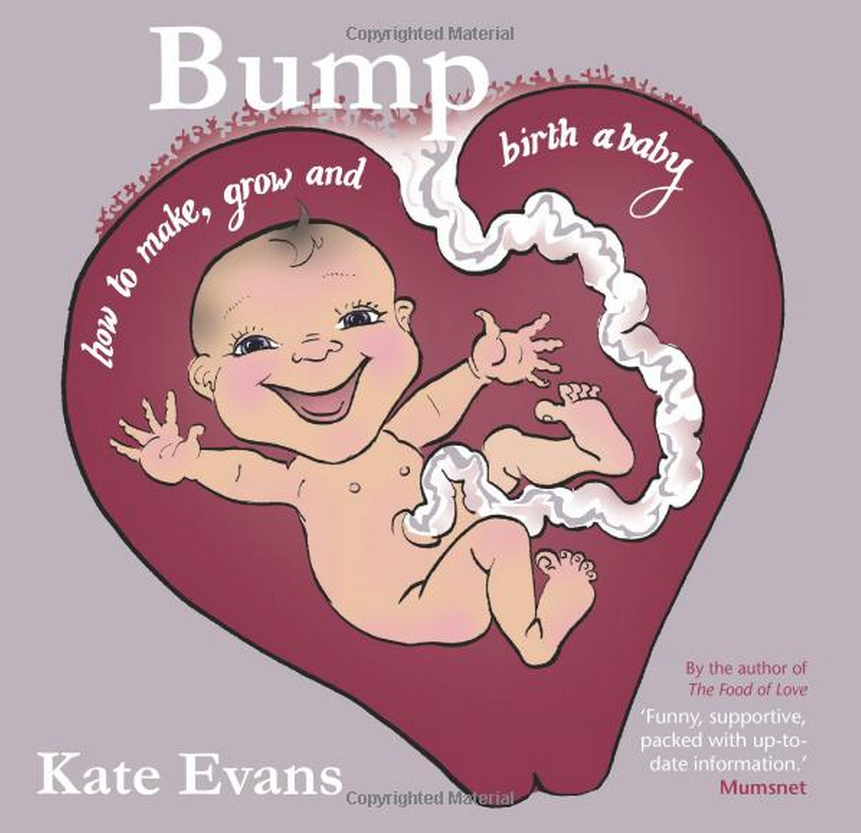
My first entry is dedicated to the lovely author Kate Evans, who has just come out with what I consider the BEST illustrated book on pregnancy: "Bump, how to make, grow, and birth a baby."  If you are thinking of having children, or have recently found out you are pregnant, this is my #1, top of the list, book suggestion for you. I enjoyed "Bump" so much that when I read it earlier this year I dreamt it could be used as a text book for Sex Education all around the world. It's only written in English so far (and some of its sections are specific to the UK and the National Healthcare Sytem), but for the most part it could work internationally. The beautiful comics and the honest humor with which Evans writes are definitely accessible to a young adult audience, and the information she shares is offered in a format that is easy to digest and multi-layered at the same time.

"Bump" covers everything from how to get to know your body for conception and contraception (Evans does a great job of illustrating the relatively simple Fertility Awareness Method), through the physiology behind getting pregnant, birth (both medicalized and not), miscarriage, abortion, and many other topics. The book is visually delightful, informative, and often hilarious. Yet while Evans brings lightness and humor to a very charged topic, her book is also based on up to date research. This means that while "Bump" is evidence based, it is very personal in tone and easy to read. Check out a chapter from the book here (although the preview chapter is of a healthy birth without intervention, in "Bump" Evans covers many different scenarios, including Emergency Cesareans and the use of pain killers during labour.) If this all sounds good, check it out!


Ruben calls, this must be it for now! I look forward to the next entry. In fact, if there's any particular topic that you would like me to focus on or if you have any questions, please get in touch!

With all good wishes,

B